Varroa Treatment Record Template (UK)
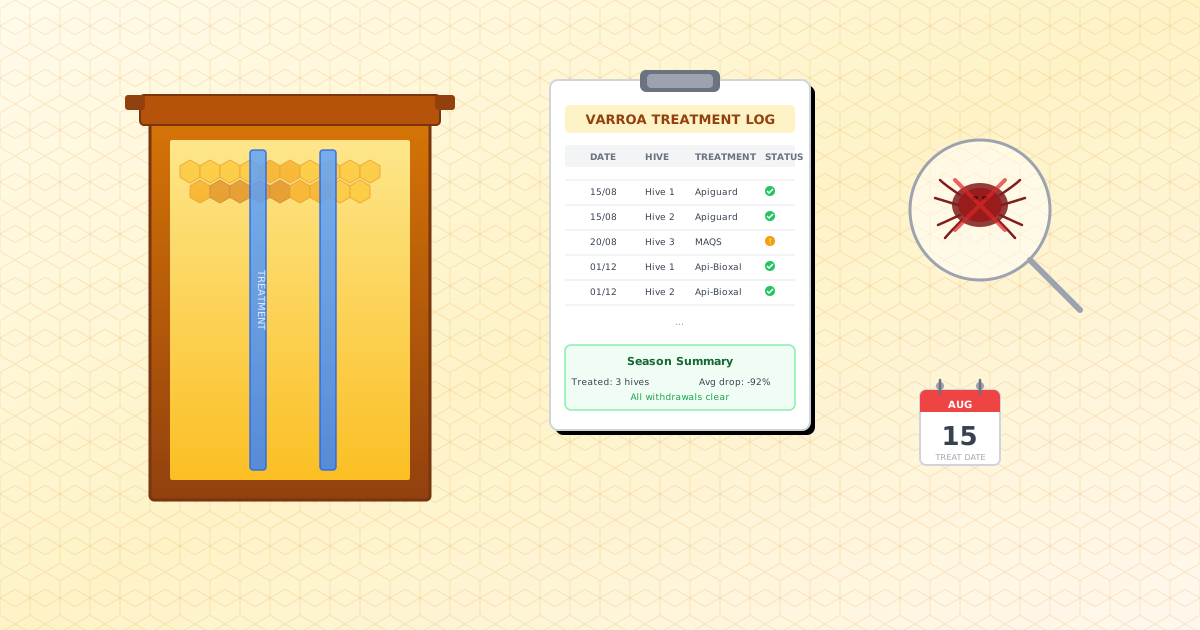
Varroa destructor remains the single biggest threat to honey bee colonies in the UK. Effective management requires not just treating your bees, but keeping accurate records of what you applied, when, and to which hives. Good records protect your bees, ensure your honey is safe to eat, and keep you on the right side of regulations.
This guide provides a free template for tracking varroa treatments and explains why proper record-keeping matters for every UK beekeeper.
Why Varroa Treatment Records Matter
There are several compelling reasons to keep detailed treatment records:
- Honey safety: Most varroa treatments have withdrawal periods. Without records, you risk contaminating your honey harvest with treatment residues.
- Legal compliance: Under the Veterinary Medicines Directorate (VMD) regulations, beekeepers using veterinary medicines must maintain treatment records. This applies to prescription treatments like Apivar as well as authorised products.
- Effectiveness tracking: Recording treatments alongside mite counts helps you assess which treatments work best in your apiaries and whether resistance is developing.
- Bee inspector visits: If a Regional or Seasonal Bee Inspector visits your apiary, they may ask to see your treatment records. Having them organised saves stress and demonstrates good husbandry.
- Colony management: Year-on-year records help you identify colonies that consistently have high mite loads, which may indicate a need for requeening or other interventions.
UK-Approved Varroa Treatments and Timing
The following treatments are currently approved or commonly used by UK beekeepers. Always check the latest VMD and NBU guidance, as product availability can change.
Summer/Autumn Treatments (Post-Harvest)
| Treatment | Active Ingredient | Method | Duration | Withdrawal Period |
|---|---|---|---|---|
| Apivar | Amitraz | Strips | 6–10 weeks | Check product label |
| Apiguard | Thymol | Gel tray | 4–6 weeks (2 applications) | None stated, but remove before supering |
| MAQS (Formic Pro) | Formic acid | Strips | 7 days | None (can use with supers) |
| Api-Bioxal | Oxalic acid | Trickle/sublimation | Single application | None stated |
Winter Treatment (Broodless Period)
| Treatment | Active Ingredient | Method | Timing | Notes |
|---|---|---|---|---|
| Api-Bioxal | Oxalic acid | Trickle (2.25% solution) or sublimation | December–January | Most effective during broodless period |
Important notes:
- Always follow the manufacturer's instructions for dosage and application method
- Oxalic acid (Api-Bioxal) is the only oxalic acid product with a VMD marketing authorisation for use in the UK. Using non-authorised products may be illegal
- The NBU recommends an Integrated Pest Management (IPM) approach, combining monitoring with timely treatment
- Check mite levels before and after treatment to assess effectiveness — the NBU recommends treating if natural mite drop exceeds 1,000 mites per day in summer
Free Varroa Treatment Record Template
Use this template to record all varroa treatments across your hives. You can copy this into a spreadsheet or print it for your records.
| Date Applied | Hive ID / Name | Apiary | Treatment | Batch No. | Dose / Qty | Date Removed | Withdrawal Ends | Mite Count (Before) | Mite Count (After) | Notes |
|---|---|---|---|---|---|---|---|---|---|---|
| 15/08/2026 | e.g. Hive 1 | e.g. Garden | e.g. Apiguard | AB1234 | 1 tray | 12/09/2026 | N/A | 35/day | 2/day | |
What to Record
For each treatment application, capture the following:
- Date applied: The exact date you placed the treatment in the hive
- Hive identification: A name, number, or code that uniquely identifies the hive
- Apiary location: Which apiary the hive is in (essential if you manage multiple sites)
- Treatment product: The brand name and active ingredient
- Batch number: From the product packaging — important for traceability
- Dose/quantity: How much was applied (e.g. number of strips, ml of solution)
- Date removed: When strips or other slow-release treatments were removed
- Withdrawal period end: The date after which honey can be harvested
- Mite counts: Before and after treatment, to assess effectiveness
- Notes: Any observations — colony reaction, weather conditions, etc.
Staying Compliant: VMD and NBU Requirements
UK beekeepers should be aware of the following regulatory requirements:
- VMD regulations: The Veterinary Medicines Directorate requires that anyone administering veterinary medicines (including varroa treatments) maintains records for at least 5 years. Records should include the product name, batch number, date of treatment, identity of the hive/colony, and withdrawal period.
- BeeBase registration: The NBU strongly recommends all beekeepers register on BeeBase. This helps with disease surveillance and means inspectors can alert you to outbreaks in your area.
- Prescription medicines: Some treatments (e.g. Apivar) are prescription-only veterinary medicines (POM-V). You must obtain these through a veterinary surgeon, and additional record-keeping requirements apply.
- Honey for sale: If you sell honey, food safety regulations require that you can demonstrate your product is free from treatment residues. Accurate treatment records with withdrawal periods are essential evidence.
Automate Your Treatment Records with HiveLog
Paper templates work, but they have limitations. Sheets get lost, handwriting becomes illegible, and it's difficult to spot patterns across multiple hives and seasons.
HiveLog's treatment tracking feature (available on the Premium plan) lets you record varroa treatments digitally with all the fields you need:
- Select the treatment product from a pre-populated list of UK-approved options
- Withdrawal period alerts remind you when it's safe to harvest
- Treatment history is linked to each hive, so you can see at a glance which colonies have been treated and when
- All records are stored securely and accessible from any device
- Export your records as CSV for sharing with bee inspectors or for your own spreadsheets
Premium plans start from just $5/month (or $45/year, saving 25%), and include a 14-day free trial so you can try it with no commitment.
Integrated Pest Management (IPM) Approach
The NBU recommends an IPM approach to varroa management. This means combining multiple strategies rather than relying solely on chemical treatments:
- Monitoring: Regular mite counts using varroa boards, sugar rolls, or alcohol washes to track infestation levels
- Biotechnical methods: Drone brood removal, artificial swarms, and brood breaks can reduce mite populations without chemicals
- Timely treatment: Treating at the right time of year, when treatments are most effective
- Record-keeping: Tracking mite levels and treatment effectiveness over time
- Colony management: Requeening colonies that consistently carry high mite loads
Good record-keeping underpins every part of this approach. Without data on mite levels and treatment history, you're making management decisions in the dark.
Further Resources
- National Bee Unit (BeeBase) — Varroa management guidance and advisory leaflets
- VMD — Information on authorised veterinary medicines
- BBKA — British Beekeepers' Association resources on disease and treatment
- Your local beekeeping association — many run treatment workshops and can advise on local conditions
Track inspections, treatments, and harvests — all in one place
Stop juggling paper notes and spreadsheets. HiveLog makes record-keeping quick, organised, and accessible from any device. Start your 14-day free trial today.
Free for 2 hives • 14-day premium trial • Cancel anytime